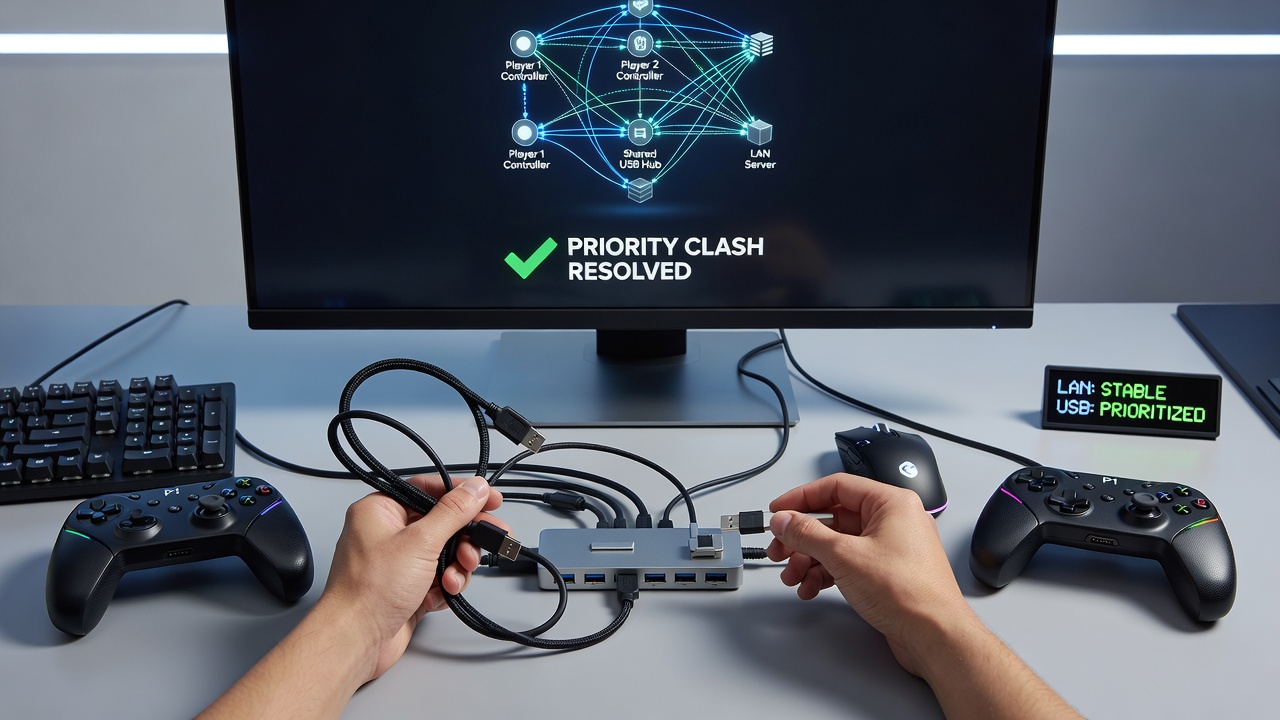
Resolving USB Device Priority Clashes That Disrupt Seamless Peripheral Integration in Multi-Player LAN Setups
USB device priority clashes occur when multiple peripherals compete for controller resources in setups where several players connect hardware across a local network for synchronized gaming sessions, and these conflicts often stem from root hub allocation patterns rather than simple bandwidth limits. Observers note that in environments with keyboards, mice, headsets, and specialized controllers all active at once, the system assigns precedence based on enumeration order and power delivery sequences, which leads to dropped inputs or delayed responses during intense multiplayer exchanges.
Core Mechanisms Behind USB Priority Assignment
USB controllers process device requests through a tiered hub architecture where each root hub manages downstream ports according to firmware-defined scheduling rules, and research from the USB Implementers Forum indicates that devices with higher power draw or specific class identifiers receive elevated handling in the queue. Data shows that when a gaming mouse and a secondary controller attach to the same hub in August 2026 configurations, the controller firmware evaluates interrupt endpoints first, which creates precedence layers that affect how quickly subsequent devices receive attention. Experts have documented cases where identical hardware on separate ports experiences unequal treatment because the host controller assigns transaction slots during initial boot sequences, and those slots remain fixed until a full re-enumeration cycle resets the priorities.
Manifestations in Multi-Player LAN Environments
In LAN gatherings where multiple stations operate in close proximity, USB clashes surface when players share external hubs or dock stations to consolidate cabling, and the resulting device tree produces overlapping interrupt requests that stall peripheral responses. Studies conducted at technical institutes in Canada reveal that network latency compounds these issues because synchronized game states demand consistent input timing across all connected units, yet a single hub overload shifts priority away from latency-sensitive devices like flight sticks or racing wheels. What's interesting is how the operating system maintains separate device stacks for each USB host controller, so relocating a peripheral between front and rear ports on the same machine alters its assigned priority without any user-visible notification.
Technicians observe that clashes intensify when wireless adapters join the mix because Bluetooth and 2.4 GHz dongles occupy dedicated bandwidth channels within the USB subsystem, and this allocation competes directly with wired inputs during peak session loads. Figures from industry reports compiled in 2025 show that setups exceeding four high-polling peripherals per controller encounter measurable queue delays, although the exact thresholds vary by chipset manufacturer and driver version.
Diagnostic Steps for Identifying Clashes
System logs provide the initial clues because Windows and Linux kernels record device attachment events along with their assigned bus numbers and port paths, allowing technicians to map which peripherals share the same controller root. Command-line utilities expose endpoint allocations in real time, and cross-referencing these outputs against manufacturer specifications reveals whether a particular device class receives preferential scheduling. Observers note that repeating the enumeration process after swapping ports often clarifies whether the clash originates from hardware topology or from driver-level arbitration rules.
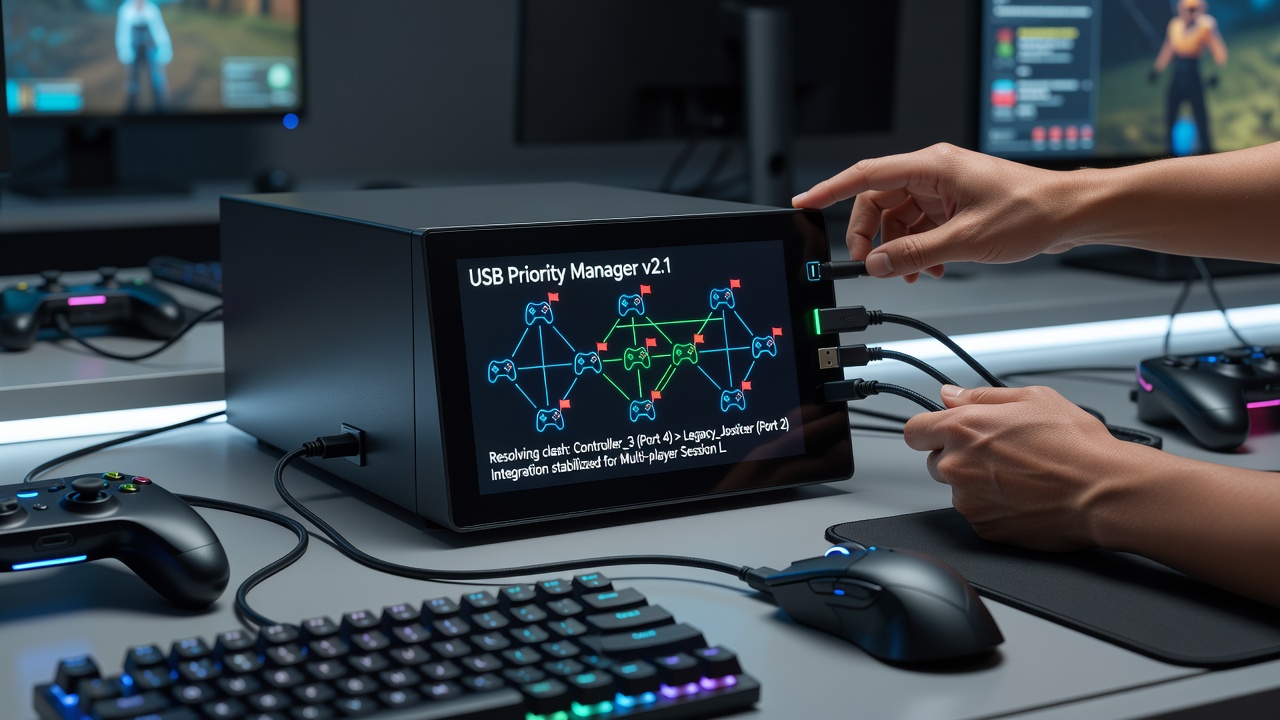
Hardware monitors attached between hubs and controllers offer another layer of visibility by tracking transaction timing and error rates, and data collected through these tools confirms when one device consistently preempts others in the same chain. Research indicates that temperature fluctuations in enclosed LAN spaces can indirectly influence USB signal integrity, which in turn affects how reliably the controller maintains priority assignments across extended sessions.
Practical Resolution Approaches
Reassigning devices across multiple host controllers balances the load because modern motherboards typically provide separate USB 3.x and USB 2.0 roots that operate independently. Technicians recommend mapping each player's essential peripherals to distinct controllers before the session begins, and this preemptive distribution prevents the firmware from creating default hierarchies that favor the first enumerated device. External powered hubs with their own controllers further isolate groups of peripherals, reducing contention at the motherboard level.
Driver updates issued by chipset vendors in August 2026 include refined scheduling algorithms that distribute transaction opportunities more evenly among connected endpoints, and applying these updates across all participating machines has produced measurable improvements in input consistency according to field reports. BIOS settings that control USB legacy support and xHCI handoff also influence priority behavior because older compatibility modes alter how the system initializes device queues during startup.
One documented case involved a European tournament setup where four players experienced intermittent controller drops until organizers redistributed devices across front-panel and rear-panel ports on each station, which effectively split traffic across two separate host controllers. Similar adjustments at Australian LAN events yielded parallel results when participants limited each hub to no more than three active gaming peripherals at any time.
Conclusion
USB device priority clashes in multi-player LAN setups arise from the interaction of controller firmware, enumeration sequences, and port topology rather than from any single hardware fault. Systematic mapping of device trees combined with strategic redistribution across available host controllers resolves most conflicts without requiring specialized equipment. Continued refinement of driver scheduling in current hardware generations supports more stable peripheral integration as network gaming events scale in size and complexity.