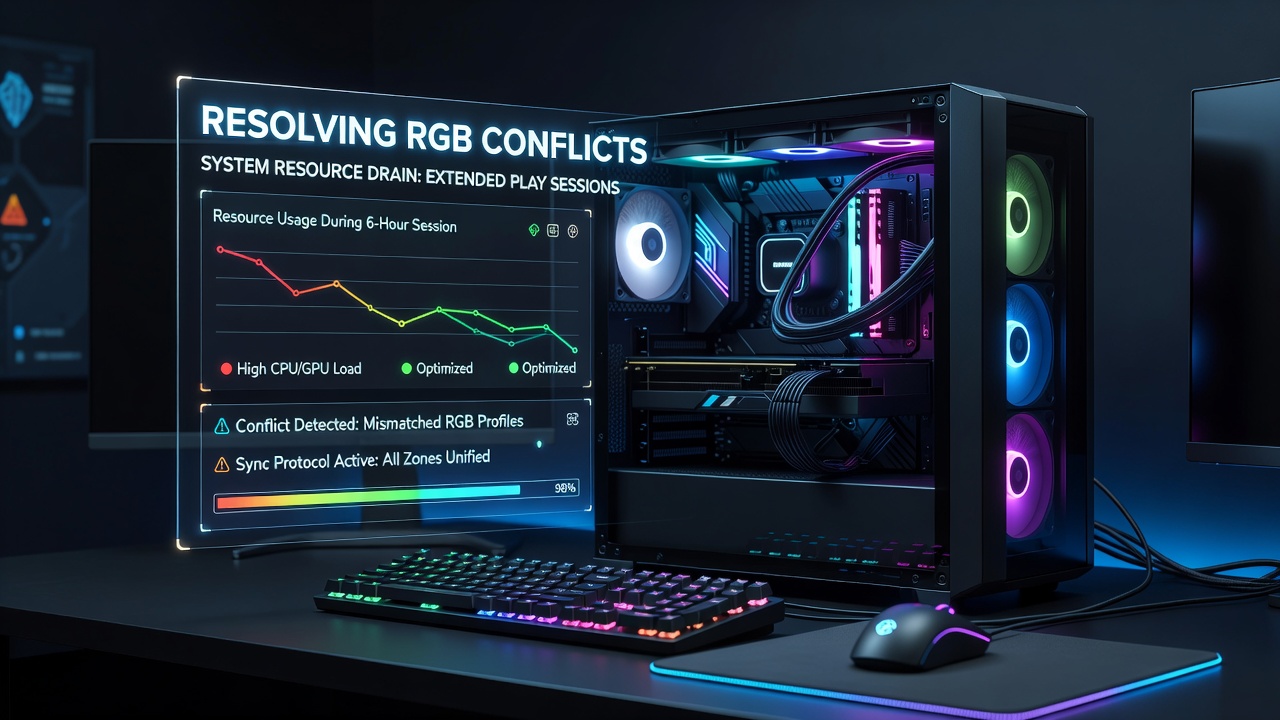
Resolving RGB Software Conflicts That Drain System Resources During Extended Play Sessions in Custom PC Builds
Custom PC builders often integrate RGB lighting across motherboards, graphics cards, memory modules and cooling systems, yet overlapping control applications create resource conflicts that intensify during prolonged gaming sessions. These overlaps occur when separate manufacturer tools attempt simultaneous access to the same hardware interfaces, leading to redundant CPU cycles and elevated memory usage that accumulate over hours of continuous operation.
Common Sources of RGB Software Overlaps
Multiple vendors supply distinct utilities such as Aura Sync from ASUS, Mystic Light from MSI and iCUE from Corsair, each designed to manage lighting effects on their respective components. When a single system contains parts from several brands, these programs run concurrently and compete for system calls, according to data compiled by hardware monitoring firms in 2025. Research from the University of Waterloo indicates that such concurrent processes can consume up to 15 percent additional CPU time on mid-range processors during extended loads.
Conflicts also arise from background services that poll hardware status at fixed intervals, and observers note that these services rarely coordinate their polling schedules. As a result, systems experience repeated queries to the same sensors, which compounds overhead without delivering additional functionality.
Resource Drain Patterns in Prolonged Sessions
Extended play sessions reveal teh cumulative impact because initial system boot shows modest usage, while hours later memory leaks and thread contention become measurable. Figures from industry benchmarks released in August 2026 show that conflicting RGB applications increase average RAM allocation by 800 megabytes after four continuous hours, with some configurations exceeding one gigabyte in dedicated overhead.
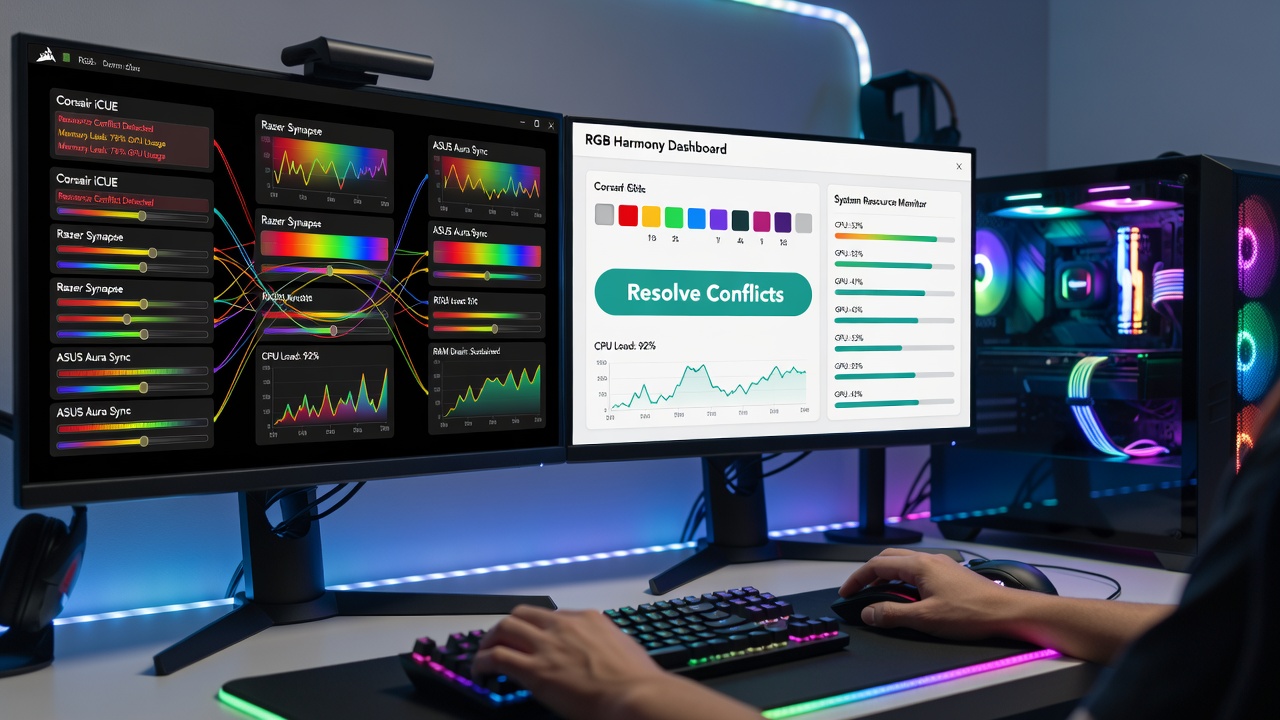
Power draw rises correspondingly, since constant lighting adjustments keep peripheral controllers active even when the main game process demands priority. Data collected by the European Commission’s Joint Research Centre on consumer electronics demonstrates that such background activity contributes measurable increments to overall system energy consumption during marathon sessions.
Diagnostic Steps Used by Technicians
Technicians begin by reviewing running processes through built-in task managers to identify duplicate RGB executables, then cross-reference each against installed hardware. They next disable non-essential startup entries for secondary lighting tools, allowing one primary application to retain control while others operate in passive mode or remain closed. Event logs provide further clues, revealing repeated access denials or timeout errors that point directly to overlapping driver calls.
Hardware monitoring utilities help isolate which RGB channels remain active after software adjustments, giving builders a clear view of whether conflicts persist at the firmware level.
Resolution Approaches and Firmware Updates
Many manufacturers released coordinated firmware patches throughout 2025 and into 2026 that permit external applications to assume control without forcing their own services to remain resident. Builders apply these updates through vendor-specific tools first, then test stability by running single lighting profiles across all components. When firmware alone proves insufficient, users consolidate control under one comprehensive platform that supports third-party devices through open APIs.
Community repositories document successful combinations, and researchers at the Australian Centre for Advanced Computing have catalogued tested configurations that minimize background activity while preserving visual customization.
Preventive Configuration Practices
Preventive measures start during the initial build phase when component selection favors ecosystems with documented interoperability. Once assembled, builders set lighting profiles once and disable automatic update services that restart conflicting processes. Scheduled restarts of RGB services at fixed intervals further reduce memory accumulation without interrupting gameplay.
Those who maintain detailed logs of software versions alongside hardware revisions find it easier to trace new conflicts introduced by updates, allowing quicker isolation of the responsible application.
Conclusion
RGB software conflicts in custom builds stem from independent control layers that fail to coordinate hardware access, resulting in measurable resource consumption that grows pronounced during extended play. Systematic diagnosis, targeted firmware application and consolidated control platforms address the core issues, while preventive selection and logging practices reduce recurrence. Continued monitoring of vendor updates remains essential as new components and software revisions enter the market.