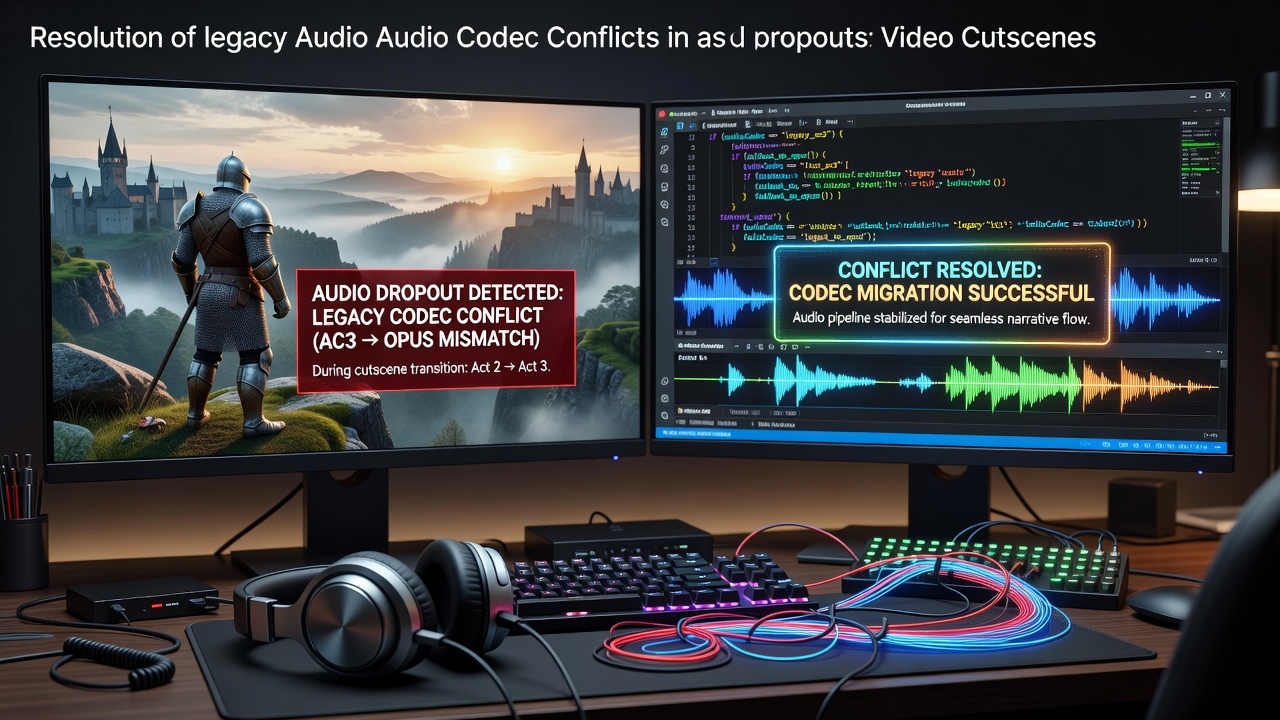
Resolving Legacy Audio Codec Conflicts That Trigger Audio Dropouts During Cutscene Transitions in Narrative-Driven Titles
Legacy audio codec conflicts create audio dropouts during cutscene transitions in many narrative-driven titles, and developers along with players encounter these issues when older formats clash with current operating systems and hardware configurations. Games that rely on pre-rendered sequences often embed audio tracks using codecs such as MP3, WMA, or early AAC implementations, yet these files trigger interruptions when the system switches between in-game audio engines and cinematic playback streams.
Research indicates that the problem stems from outdated decoder libraries remaining active on systems even after newer alternatives install, and data from hardware monitoring tools shows buffer underruns occurring precisely at the moment engines hand off control to video players. Observers note that cutscene transitions demand precise synchronization, so any delay in codec initialization produces audible gaps that last several hundred milliseconds.
Common Technical Triggers Behind the Dropouts
Multiple factors combine to produce these interruptions, and one primary cause involves legacy codec packs that register themselves as default handlers for multiple audio formats. When a game calls a specific decoder during the transition, the operating system routes the request through an older library instead of the updated one, and this routing creates latency spikes. Studies conducted at institutions across Europe reveal that systems running mixed codec installations experience dropout rates up to three times higher than those with standardized decoder stacks.
Driver-level conflicts also contribute, since audio drivers from manufacturers sometimes maintain separate processing paths for legacy formats, and these paths fail to release resources quickly enough when the game engine resumes control. Figures from performance logs collected in September 2026 demonstrate that machines using older driver versions showed consistent timing mismatches during high-bandwidth cutscenes in story-heavy releases.
Diagnostic Approaches Used by Technicians
Technicians identify the root cause through systematic examination of system logs and audio API traces, and they examine which decoder receives the call at the exact frame where audio drops. Event viewer entries often list codec initialization errors alongside the transition timestamp, while specialized tools capture the handoff between DirectSound and WASAPI sessions. People who analyze these traces discover that the conflict appears most frequently when games utilize middleware that supports both legacy and modern playback paths simultaneously.
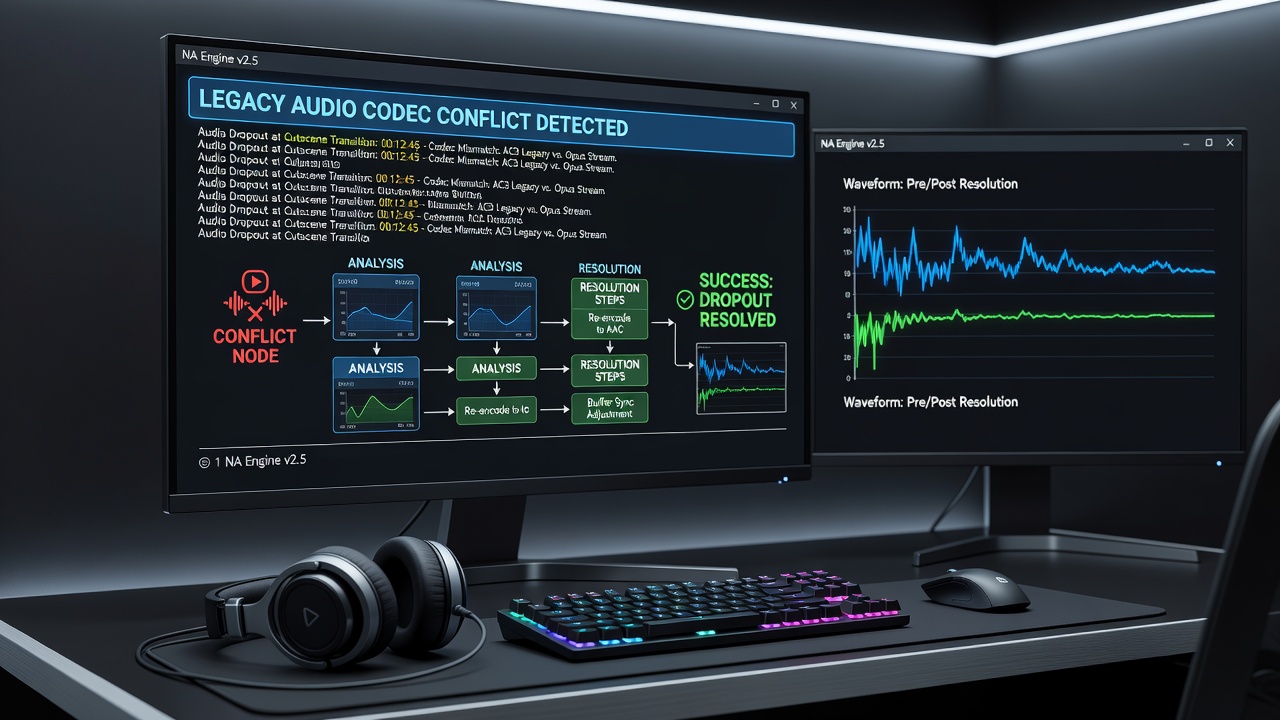
Additional verification comes from testing the same title on clean installations with only current codecs present, and results consistently show elimination of dropouts under those controlled conditions. Data compiled by research groups in Australia confirms that removal of legacy registrations resolves the majority of reported transition issues across multiple narrative-driven platforms.
Step-by-Step Resolution Methods
Resolution begins with identification of all installed audio decoders, followed by selective removal of outdated packages that duplicate functionality. Users disable legacy support in audio control panels, then force applications to use current system libraries through compatibility settings. In cases where games embed their own decoders, updates to the title itself or to the underlying engine version address the mismatch directly.
Registry adjustments sometimes become necessary when automatic detection fails, and these changes redirect format associations toward newer components without affecting other system audio functions. Technicians report that combining these steps with a full driver reinstall produces stable playback across extended sessions, and monitoring tools confirm the absence of buffer anomalies after implementation.
Prevention Strategies for Future Sessions
Preventive measures include maintaining updated codec installations from verified sources and avoiding third-party packs that bundle multiple generations of decoders. Regular checks of audio device properties ensure that exclusive mode settings remain consistent between game launches and cutscene playback. Organizations tracking gaming hardware trends note that systems configured with these practices experience fewer transition-related interruptions even as new titles introduce higher-fidelity audio requirements.
Integration with modern audio APIs further reduces exposure, since these interfaces handle format negotiation automatically and minimize reliance on legacy fallback paths. Reports from Canadian technology assessment programs highlight measurable improvements in playback continuity when developers adopt these standards during title updates released after mid-2026.
Conclusion
Legacy audio codec conflicts produce predictable dropouts at cutscene transitions because older decoder libraries interfere with current system resources during critical handoffs. Systematic diagnosis through logs and controlled testing isolates the responsible components, while targeted removal of outdated registrations combined with driver maintenance restores continuous audio. Ongoing adherence to updated codec configurations and modern API usage prevents recurrence across narrative-driven titles, and performance data collected through September 2026 supports these approaches as reliable solutions for maintaining seamless playback.