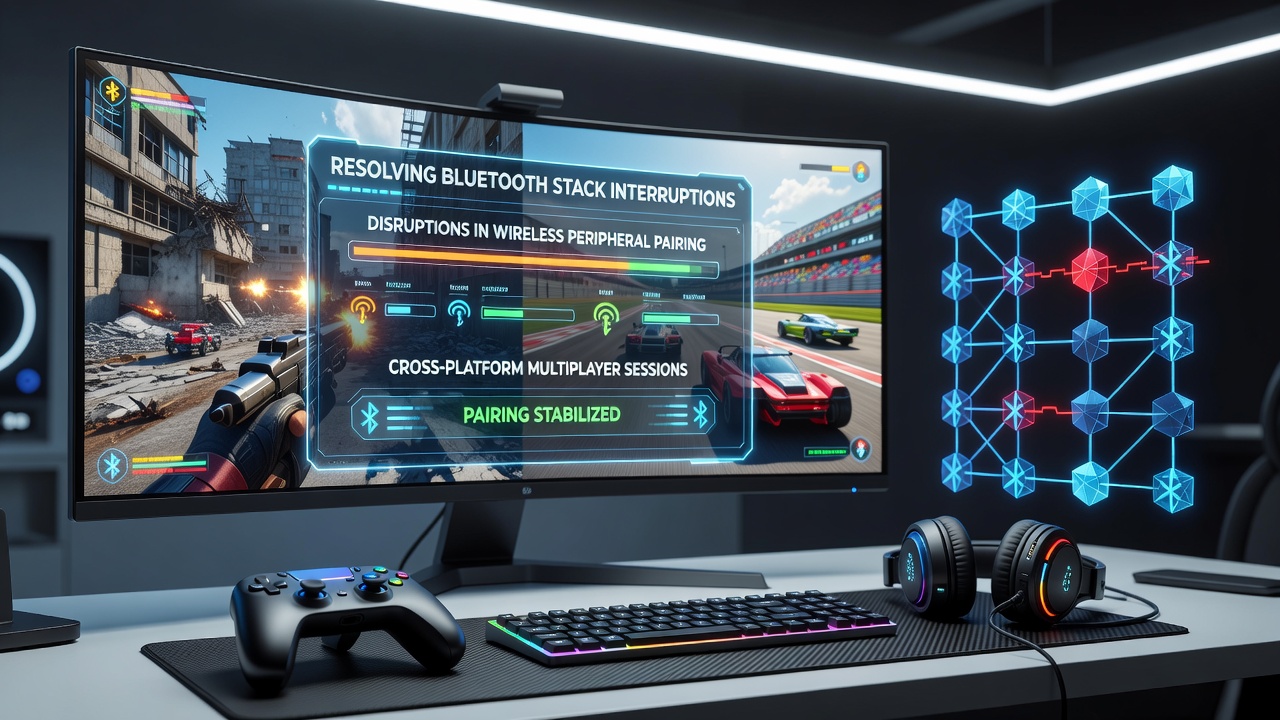
Resolving Bluetooth Stack Interruptions That Disrupt Wireless Peripheral Pairing During Cross-Platform Multiplayer Sessions
Bluetooth stack interruptions have emerged as a recurring challenge for gamers who rely on wireless peripherals during cross-platform multiplayer sessions, where devices must maintain stable pairings across operating systems and hardware ecosystems. Research from wireless standards organizations shows that these interruptions often stem from protocol mismatches, resource conflicts in the host controller interface, and signal contention in crowded frequency bands. Data indicates that multiplayer environments amplify the problem because multiple devices transmit simultaneously, which increases the likelihood of stack resets and dropped connections.
Understanding Bluetooth Stack Behavior in Gaming Contexts
Observers note that the Bluetooth stack manages everything from initial device discovery to ongoing data packet routing, yet it remains vulnerable to interruptions when gaming platforms switch between profiles for audio, input, and low-energy connections. Studies reveal that cross-platform sessions, such as those linking Windows PCs with PlayStation or Xbox consoles, expose differences in how each system handles Bluetooth Low Energy advertising intervals and connection supervision timeouts. According to industry reports, these variations lead to repeated pairing attempts that exhaust available stack buffers and trigger automatic disconnections.
What's interesting is how firmware updates released in September 2026 introduced refined adaptive frequency hopping algorithms designed to reduce interference from overlapping Wi-Fi channels, yet adoption rates vary widely across peripheral manufacturers. Those who've examined device logs find that incomplete stack reinitialization after sleep states frequently causes peripherals to appear paired on one platform while remaining invisible on another.
Common Causes of Pairing Disruptions
Evidence suggests several primary triggers for stack interruptions during multiplayer sessions. Resource contention occurs when multiple wireless devices compete for the same Bluetooth radio, particularly in setups that combine headsets, controllers, and keyboards. Protocol version mismatches between devices and host chipsets create handshake failures that force the stack into recovery modes. External electromagnetic noise from nearby routers or other 2.4 GHz equipment compounds the issue, leading to packet loss rates that exceed the stack's error correction thresholds.
Researchers discovered that legacy pairing methods still used in some older peripherals fail to negotiate secure connections efficiently with modern hosts, resulting in prolonged authentication loops. Data from regulatory bodies shows that spectrum congestion in urban gaming environments further degrades signal quality, which forces the stack to drop links rather than risk corrupted input data.
Diagnostic Approaches Used by Technicians
Technicians begin by examining system logs for repeated HCI command timeouts and connection parameter update failures. They then isolate variables by testing one peripheral at a time across different host platforms to identify whether the interruption originates in the device firmware, the host stack, or the wireless environment. Tools that capture Bluetooth traffic reveal patterns such as excessive retransmissions or sudden role switches between master and slave devices.
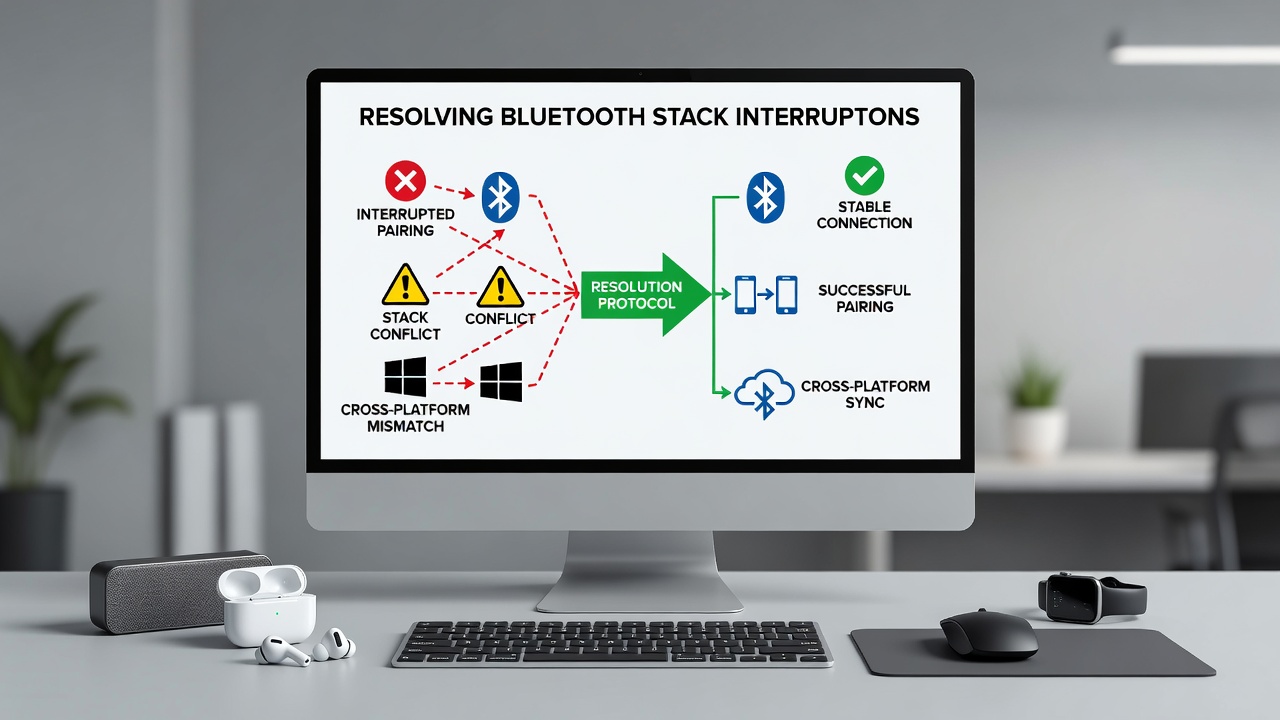
One study revealed that clearing cached pairing keys on both the peripheral and host often restores functionality without requiring hardware changes. Those who've applied systematic testing find that monitoring RSSI values during active sessions helps pinpoint whether physical distance or interference is the dominant factor.
Resolution Methods and Configuration Adjustments
Resolution begins with updating Bluetooth drivers and chipset firmware to versions that incorporate the September 2026 enhancements for cross-platform stability. Users then adjust connection intervals through advanced device settings to reduce the frequency of supervision timeout events. Disabling unnecessary Bluetooth profiles, such as those for file transfer, frees stack resources for gaming-specific connections.
According to figures from the Federal Communications Commission, operating in less congested spectrum areas or employing external USB Bluetooth adapters with dedicated antennas improves reliability in multi-device scenarios. Resetting the entire Bluetooth stack through operating system utilities clears corrupted state information that accumulates during extended sessions. In cases where hardware limitations persist, switching to wired alternatives for non-essential peripherals provides a stable baseline while troubleshooting continues.
Prevention Strategies for Sustained Performance
Prevention relies on maintaining consistent firmware across all devices in a multiplayer setup and scheduling regular stack maintenance through automated scripts or manufacturer utilities. Placing gaming stations away from dense wireless networks minimizes interference that would otherwise force repeated frequency hops. Industry organizations recommend verifying that all peripherals support the latest Bluetooth core specifications to ensure compatibility during platform transitions.
Those monitoring long-term trends note that proactive monitoring of connection quality metrics allows early intervention before interruptions escalate into full pairing failures. External links to resources such as FCC wireless guidance and Bluetooth SIG technical documentation provide additional configuration details for specific hardware combinations.
Conclusion
Addressing Bluetooth stack interruptions requires a methodical approach that combines firmware maintenance, environmental management, and targeted configuration changes. Data shows that consistent application of these techniques restores reliable pairing across platforms and reduces session disruptions for wireless peripheral users engaged in cross-platform multiplayer gaming.