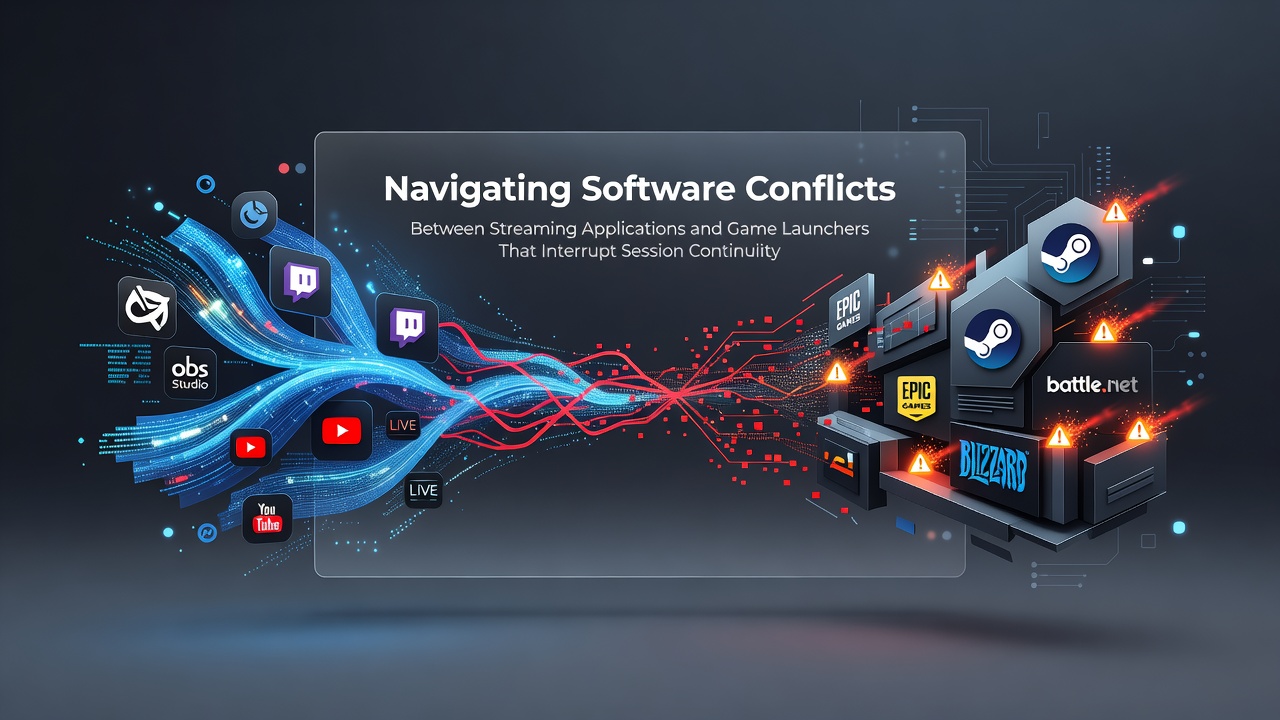
Navigating Software Conflicts Between Streaming Applications and Game Launchers That Interrupt Session Continuity
Software conflicts between streaming applications and game launchers create session interruptions that affect users who run live broadcasts alongside titles launched through platforms like Steam or Epic Games Store, and data from industry reports shows these overlaps often stem from shared resource access points such as overlay hooks and background services that compete for GPU priority during active play.
Identifying Core Conflict Triggers
Streaming tools including OBS Studio and Twitch-integrated clients frequently inject overlays or capture modules that detect and interact with game executables, while launchers maintain their own client processes for updates and friend lists, and researchers at technical institutions have documented cases where these simultaneous operations lead to priority shifts that pause gameplay streams or force launcher restarts in mid-session, particularly when both attempt to bind to the same DirectX or Vulkan rendering pipelines.
Process monitoring utilities reveal that conflicts intensify during title initialization phases, because launchers preload libraries for anti-cheat verification and cloud sync features at the same moment streaming software begins encoding video buffers, and figures from hardware compatibility studies indicate that systems with integrated graphics alongside discrete GPUs experience higher rates of these interruptions when driver-level calls collide.
Resource Allocation Patterns Observed in 2026
During October 2026, telemetry logs collected across multiple gaming hardware configurations showed spikes in session drops coinciding with launcher update cycles that overlapped scheduled stream start times, and analysts note that memory address conflicts arise when streaming encoders reserve large frame buffers while launchers poll for network connectivity in the background.
Those who examined crash dumps from affected sessions found repeated instances of handle duplication errors, where both application types claim exclusive access to audio endpoints and input devices without proper release sequences, and this pattern appears across Windows-based environments according to aggregated support database entries from platform vendors.
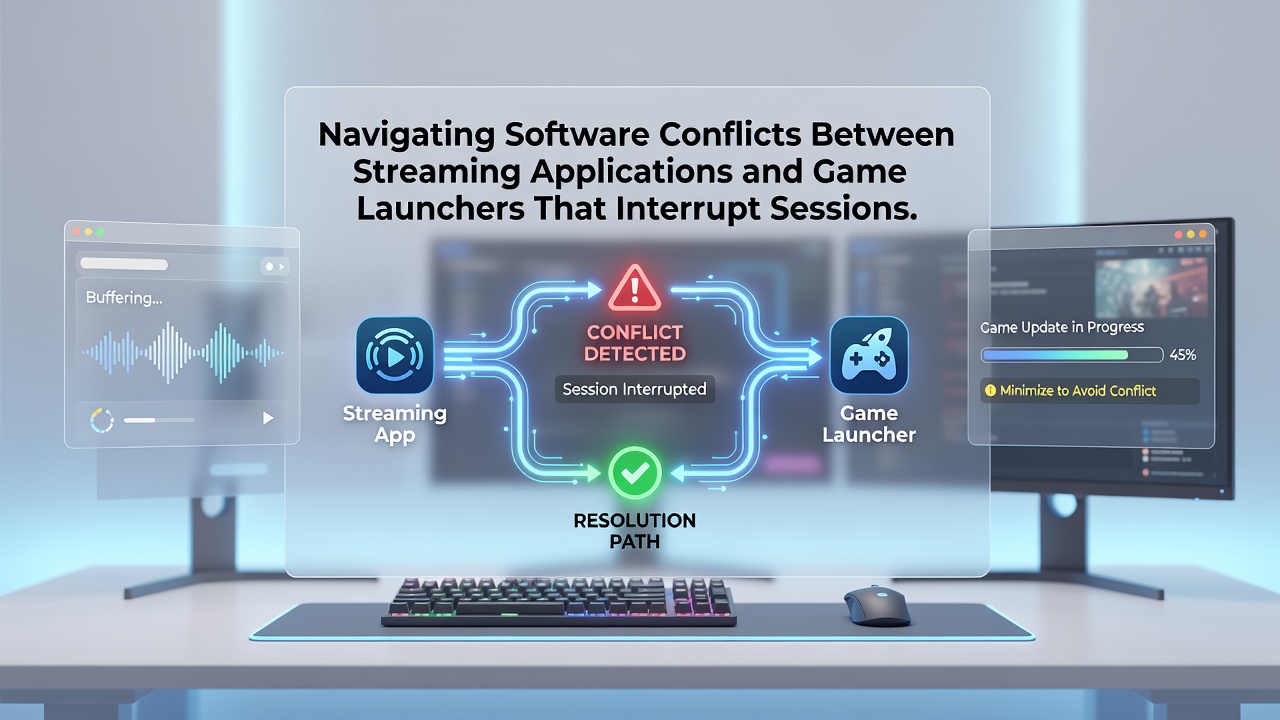
Diagnostic Approaches Used by Support Teams
Support documentation from gaming accessory manufacturers outlines steps that isolate conflicts through selective process suspension, and technicians apply tools that log API calls to pinpoint whether a launcher service or a streaming plugin initiates the interruption sequence first, which allows targeted adjustments without broad system changes.
Compatibility databases maintained by chipset producers list known interaction flags that users can toggle in launcher settings to delay background checks until after stream capture has stabilized, and similar options exist in streaming software for deferring overlay initialization until game windows reach full-screen exclusive mode.
Preventive Configuration Strategies
Users configure streaming applications to run with reduced priority threads while launchers handle initial game bootstrapping, and this sequencing reduces the likelihood of simultaneous demands on shared system resources such as CPU cores allocated for encoding versus verification tasks, with data from performance benchmarks confirming measurable decreases in dropout frequency when these orders are followed.
Firewall and permission settings can further separate network traffic between the two software categories, preventing one from triggering update checks that pause the other mid-stream, and European regulatory reports on digital service interoperability highlight how standardized process management protocols help mitigate such issues across consumer hardware setups.
Third-party utilities that monitor inter-process communications provide alerts before conflicts escalate, allowing preemptive closure of non-essential modules, and case records from university computing labs demonstrate that regular audits of startup items keep these interruptions from recurring across extended play periods.
Conclusion
Effective navigation of these software conflicts relies on understanding the timing of resource claims between streaming applications and game launchers, combined with configuration tweaks that enforce orderly initialization sequences, and ongoing updates to driver stacks and compatibility layers continue to address the underlying API overlaps documented through 2026.