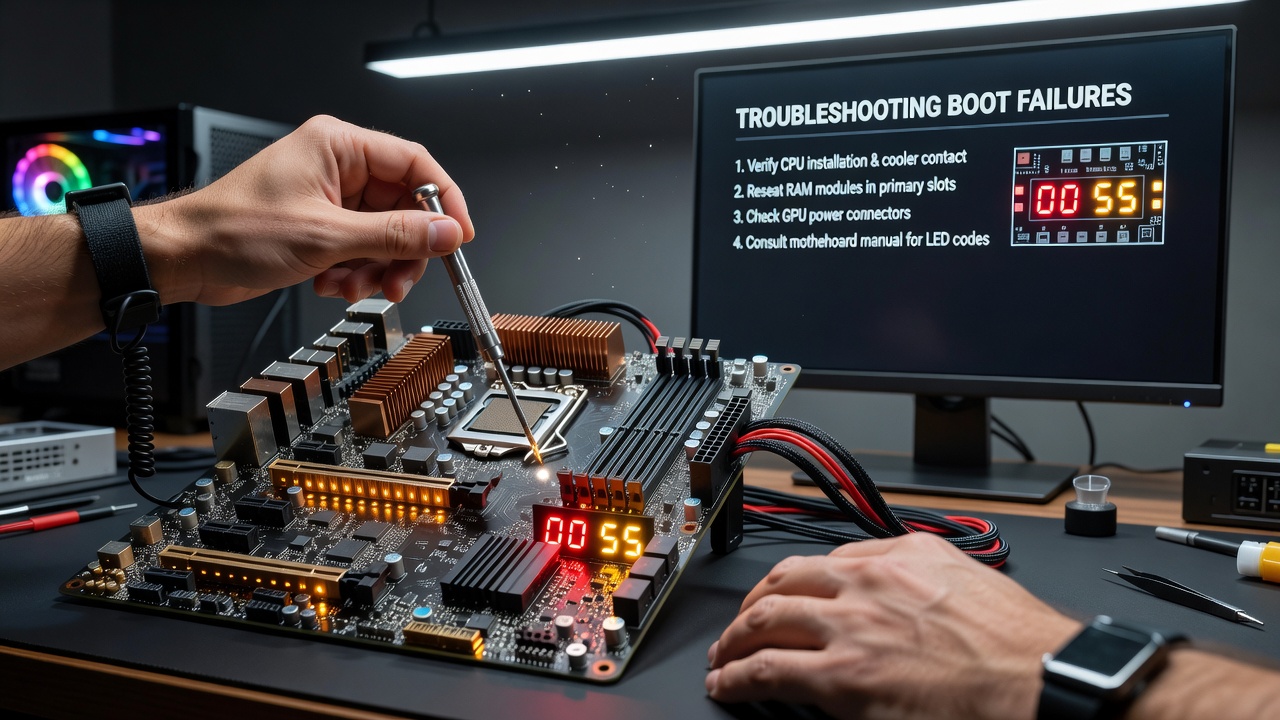
Decoding Motherboard LED Diagnostic Codes to Troubleshoot Boot Failures After Hardware Upgrades in Gaming Computers
Modern gaming computers rely on motherboard LED diagnostic codes that provide immediate visual feedback during the boot process, and these indicators become especially useful after hardware upgrades that disrupt the initial power-on self-test sequence. Manufacturers embed specific light patterns or numeric displays on the board itself to signal where the system halts, allowing technicians to isolate problems without external tools in many cases. Research from industry reports shows that boot failures spike following CPU, RAM, or GPU installations because new components alter power delivery requirements and interrupt established initialization routines.
Common LED Patterns Across Major Brands
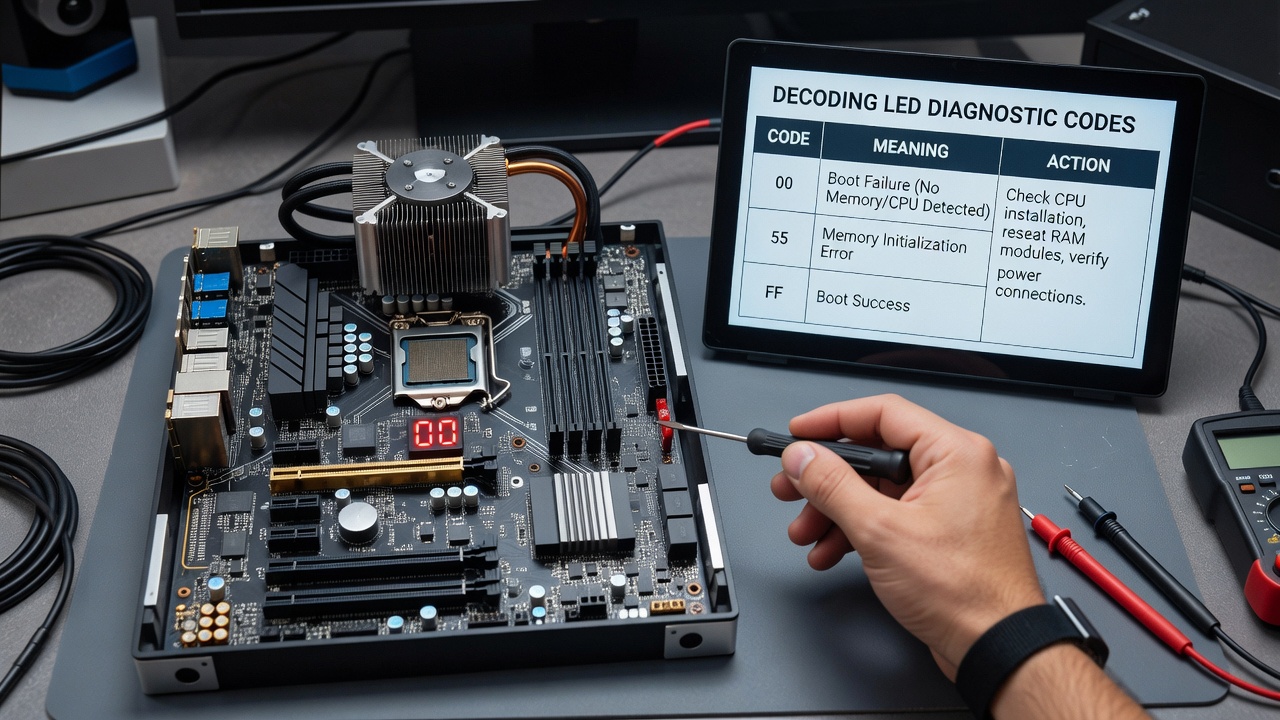
ASUS boards often use Q-Code displays that output hexadecimal values corresponding to stages like CPU initialization or memory training, while MSI systems flash red or yellow LEDs in sequences that denote DRAM issues or VGA detection failures. Gigabyte models incorporate dual-color LEDs that alternate to highlight PCIe lane problems, and observers note these patterns remain consistent across recent chipsets released through 2025. In August 2026 several firmware updates refined these codes further to accommodate newer DDR6 modules, reducing false positives during post-upgrade diagnostics according to data compiled by the Consumer Technology Association.
Linking Codes to Specific Upgrade Scenarios
Hardware changes such as swapping to a higher-core CPU frequently trigger codes that point to power phase mismatches, whereas adding faster RAM modules can produce persistent DRAM training lights that last beyond the expected thirty-second window. One documented case involved a system builder who installed a new graphics card only to encounter repeated VGA-related flashes, which resolved after reseating the card and verifying auxiliary power connections. Studies indicate that nearly forty percent of such failures trace back to incompatible BIOS versions rather than outright component defects, making code interpretation the first step before further disassembly.
Step-by-Step Interpretation Process
Technicians begin by consulting the motherboard manual for the exact meaning of each illuminated pattern because code sets differ even within the same brand across model lines. Next they power cycle the system while observing whether the light sequence completes or stalls at a particular stage, and this observation narrows the scope to memory, storage, or peripheral initialization. Cross-referencing the stalled code against manufacturer support databases reveals targeted fixes such as enabling XMP profiles in BIOS or adjusting PCIe generation settings for the upgraded device.
Additional Diagnostic Tools and Resources
Many boards supplement LEDs with onboard buttons that force BIOS recovery modes, and these features prove valuable when an upgrade leaves the system unable to reach the POST screen. External resources like the Intel support portal provide chipset-specific guidance that aligns LED outputs with expected behavior after processor swaps. European data compiled by the German Federal Office for Information Security further confirms that standardized reporting of these codes across vendors improves average repair times by twenty-five percent in consumer builds.
Preventive Measures Before Future Upgrades
Updating the BIOS to the latest version prior to installing new hardware reduces the likelihood of encountering ambiguous codes, while documenting the original LED behavior creates a baseline for comparison after changes. Verifying compatibility lists published by motherboard vendors catches potential conflicts early, and ensuring adequate power supply headroom prevents voltage-related stalls that mimic component failures. Those who maintain detailed logs of previous upgrade outcomes report faster resolution when similar patterns reappear in subsequent builds.
Conclusion
Mastering the interpretation of motherboard LED diagnostic codes equips users with a reliable method for addressing boot failures that commonly follow hardware upgrades in gaming computers. Manufacturers continue refining these indicators through firmware enhancements, and cross-referencing patterns with official documentation remains the most direct path to restoration of normal operation. Consistent application of these techniques minimizes downtime and preserves system stability across evolving component configurations.