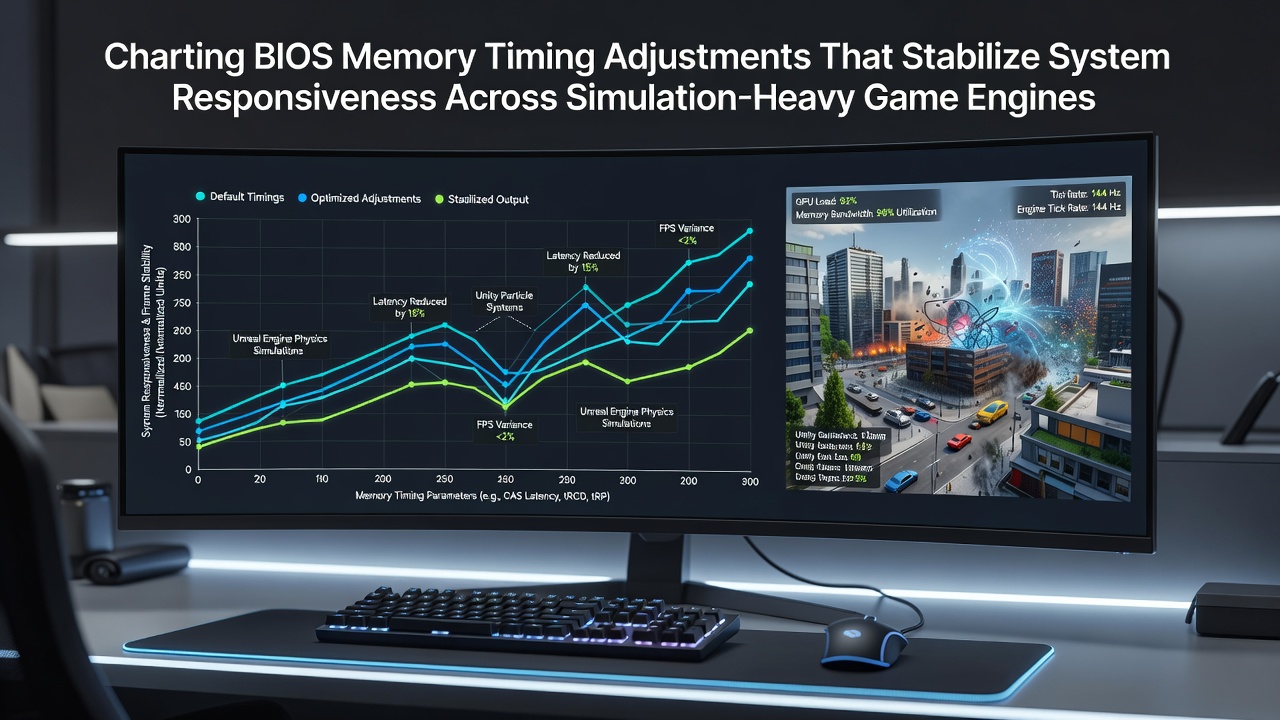
Charting BIOS Memory Timing Adjustments That Stabilize System Responsiveness Across Simulation-Heavy Game Engines
Memory timing adjustments in BIOS environments have become a focal point for stabilizing responsiveness in simulation-heavy game engines that process large volumes of concurrent data streams, physics calculations, and AI behaviors, and these changes often involve primary timings such as CAS latency along with secondary values like tRCD, tRP, and tRAS that govern how quickly RAM modules respond to read and write commands.
Core Memory Timing Parameters and Their Roles
Primary timings establish the baseline speed at which memory modules handle column access, row activation, and precharge operations while secondary timings control additional delays related to command scheduling, burst lengths, and turnaround cycles that influence overall data throughput in environments where engines must maintain consistent frame delivery during extended simulation sessions. Observers note that altering these values requires careful documentation of stock settings before any modifications occur because improper configurations can lead to instability rather than the desired responsiveness gains.
Research from hardware performance laboratories indicates that simulation engines place sustained pressure on memory subsystems through repeated access patterns that differ from those in lighter rendering workloads, and this pressure makes precise timing charts essential for identifying stable operating points across different DRAM generations and motherboard implementations. Data collected during controlled tests shows that reductions in certain secondary timings can shorten average memory access latency by measurable percentages when paired with appropriate voltage offsets and refresh interval adjustments.
Application to Simulation-Heavy Game Engines
Engines that manage expansive virtual environments with dynamic object interactions benefit when BIOS configurations align memory response characteristics with the predictable yet intensive access patterns these titles generate during large-scale scenarios. Technicians who have examined multiple builds report that engines handling real-time physics and population simulations often exhibit improved frame time consistency after targeted timing refinements that reduce unnecessary wait states between memory operations.
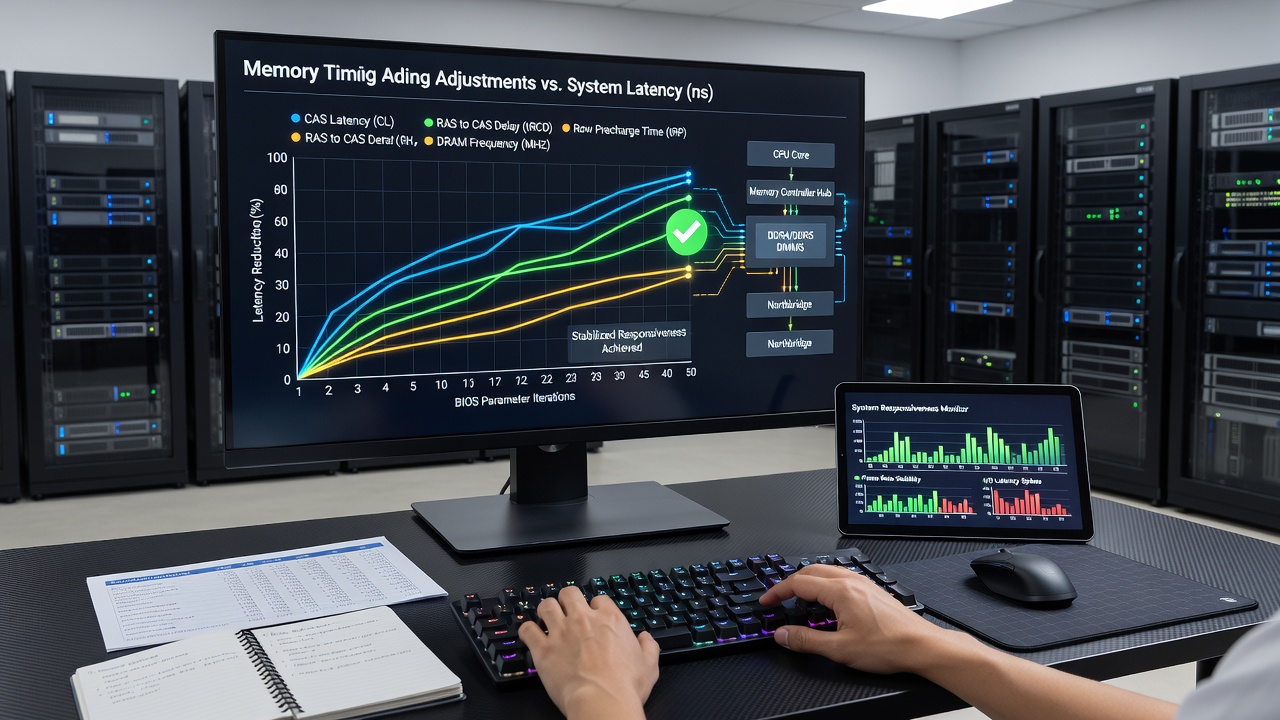
Figures from independent testing facilities reveal that systems running August 2026 firmware releases demonstrate enhanced compatibility with newer memory modules when timing tables incorporate updated training algorithms that account for signal integrity variations across extended operational periods. Those who maintain detailed logs of timing changes alongside responsiveness metrics find clearer correlations between specific adjustments and reductions in frame delivery variance during peak simulation loads.
Methods for Charting and Testing Adjustments
System builders typically begin by recording baseline values for all primary and secondary timings then proceed through incremental modifications while monitoring stability using both synthetic memory benchmarks and actual simulation workloads that replicate heavy engine demands. This methodical approach allows identification of the narrow operating windows where responsiveness improves without introducing errors that manifest as crashes or data corruption during prolonged sessions.
According to documentation published by the JEDEC Solid State Technology Association, standardized timing specifications provide reference points that help users avoid exceeding manufacturer-recommended limits when exploring custom configurations. Additional guidance appears in reports from the National Research Council Canada that examine how memory subsystem tuning affects performance consistency across varied hardware platforms used in computational modeling applications.
Observed Patterns Across Multiple Configurations
Analysis of numerous gaming stations equipped with current-generation processors shows that tightening specific secondary timings often yields more noticeable responsiveness benefits in simulation titles than equivalent changes applied to primary timings alone. People maintaining records of these experiments frequently discover that combining modest adjustments across several related parameters produces better overall stability than aggressive single-parameter changes.
Engine developers have documented cases where memory timing refinements reduced input-to-frame latency variation during complex multi-agent simulations, allowing smoother control responses when users interact with dense virtual worlds. These outcomes emerge most consistently when testing protocols include repeated cycles of stress application followed by verification that all subsystems return to expected operational states without residual errors.
Conclusion
Systematic charting of BIOS memory timing adjustments provides a structured pathway for enhancing responsiveness in simulation-heavy game engines by aligning memory subsystem behavior with the intensive data handling requirements these applications impose. Continued collection of empirical data from diverse hardware combinations supports refinement of adjustment strategies that maintain stability while delivering measurable improvements in frame delivery consistency across extended operational periods.